







Charging speed has become just as important as battery size. Nobody wants to wait an hour when a quick top-up can get them through the day. That is where fast charging technologies step in, promising speed and convenience.
But many users still get confused between fast charging and flash charging. They sound similar, yet work very differently. Let us break it down in a clear and practical way.
What is Fast Charging?
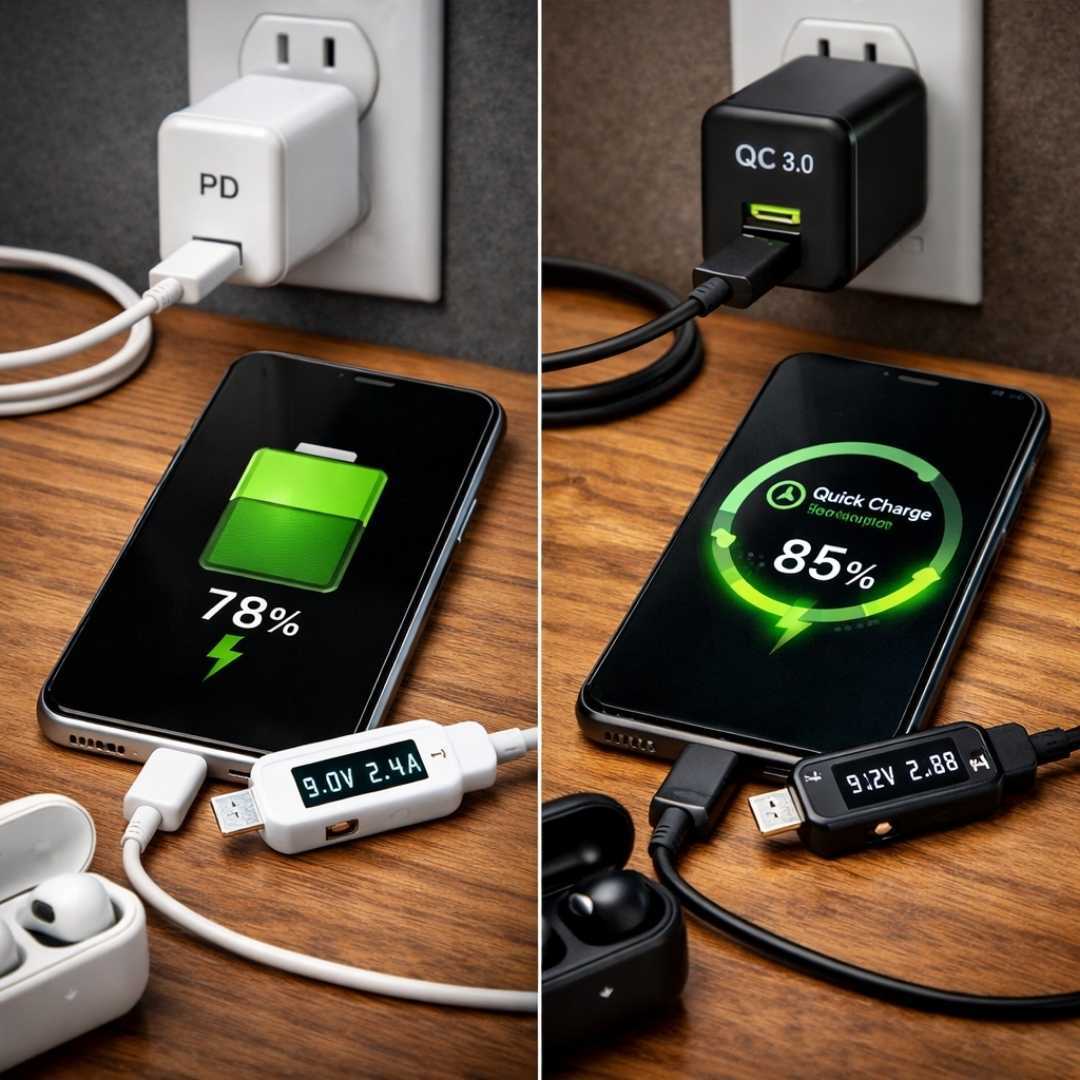
Fast charging is a broad term used for charging methods that deliver power faster than standard chargers. It works by increasing voltage, current, or both, while keeping the battery safe.
Most modern phones, tablets, and even laptops rely on fast charging standards that adjust power intelligently.
How Fast Charging Works?
Fast charging uses communication between the charger and device. The device requests the power it can safely handle, and the charger responds.
Popular fast charging standards include
• Qualcomm Quick Charge
• PPS supported charging
This is why fast charging is widely trusted and commonly used.
Devices That Support Fast Charging
Fast charging works across many brands and product types. You will find it on iPhones, Android phones, laptops, power banks, and wireless earbuds.
Because of this broad support, fast charging and flash charging serve very different audiences.
Shop mobile chargers offering fast performance compact design and durable quality so you never have to worry about low battery again.
What is Flash Charging?
Flash charging is a proprietary ultra-fast charging technology developed by specific smartphone brands. Examples include OPPO VOOC, Vivo Super FlashCharge, and Realme SuperVOOC.
Flash charging focuses on extreme speed by using low voltage and very high current.
How Flash Charging is Different?
Instead of increasing voltage, flash charging pushes higher current through specialized cables. Most heat is generated in the charger, not the phone.
This design allows phones to charge incredibly fast without overheating the device itself.
Devices That Support Flash Charging
Flash charging only works on compatible phones from the same brand. It also requires a matching charger and a special high-current cable.
Without the right setup, flash chargers fall back to normal charging speeds.
Buy car chargers offering quick charging ports smart design and durable build making them the perfect companion for all your road trips and commutes.
Fast Charging and Flash Charging: Key Differences
Understanding the Difference Between fast charging and flash charging becomes easier when you look at how they compare in real use.
Charging Speed Comparison
Fast charging usually reaches around 50 percent in about 30 minutes. Flash charging can charge a phone fully in under 10 minutes on supported models.
This makes flash charging ideal for users who need power immediately.
Compatibility and Convenience
Fast charging works across brands and devices. Flash charging is limited to a single brand ecosystem.
If you use multiple devices, fast charging is far more practical.
Cable and Charger Requirements
Fast charging uses standard certified USB C cables. Flash charging requires brand-specific high-current cables.
This limits flexibility but enables unmatched speed.
Heat Management and Battery Safety
Heat control is critical for battery health. Fast charging manages heat by regulating voltage and current within the device.
Flash charging shifts most heat to the charger itself. This keeps the phone cooler during ultra-fast charging sessions.
Both systems are safe when used with certified chargers and cables.
Browse data cables offering strong build flexible design and reliable performance making them the go to accessory for all your device needs.
Which Charging Technology Should You Choose?
Your choice depends on how you use your devices.
If you value flexibility, travel convenience, and cross-brand compatibility, fast charging is the better option. It works everywhere and with almost everything.
If you use a compatible phone and want the fastest charging possible, flash charging delivers unmatched speed within its ecosystem.
Most users benefit more from fast charging, while flash charging suits power users loyal to a specific brand.
Conclusion
The debate around fast charging and flash charging is really about priorities. Flash charging wins on pure speed but sacrifices compatibility. Fast charging focuses on balance, offering reliable speed across many devices.
Understanding the difference helps you choose the right charger, protect your battery, and avoid slow-charging surprises. Choose speed if you need it, or choose flexibility if you value convenience.
Shop power banks with long lasting charge compact size and multiple ports allowing you to power up several devices with complete ease.
FAQs About Flash Charging and Fast Charging
1. What is the main difference between flash charging and fast charging?
Flash charging is a brand specific ultra fast method using high current at low voltage. Fast charging is a general standard that works across many devices and brands.
2. Can a flash charger be used with any smartphone?
No, flash chargers need compatible phones from the same brand to reach full speed. On other phones, they usually fall back to normal charging.
3. How fast is flash charging compared to fast charging?
Flash charging can fully charge supported phones in under 10 minutes. Fast charging typically reaches about 50 percent in around 30 minutes.
4. Is fast charging safer than flash charging for batteries?
Both are safe when used with certified chargers and cables. Flash charging keeps phones cooler by shifting heat to the charger.
5. Which devices support flash charging technology?
Flash charging is limited to specific brands like OPPO, Vivo, Realme, or OnePlus. Fast charging works on most modern phones, tablets, and laptops.
6. What power levels are used in fast charging and flash charging?
Fast charging usually ranges from 15W to over 100W, depending on the standard. Flash charging can exceed 200W on supported flagship devices.
7. Are wireless fast chargers as powerful as wired flash chargers?
Wireless charging is more convenient but still slower than wired flash charging. Wired charging remains the fastest and most efficient option.