







Power banks have become an essential gadget for modern smartphone users. Whether you travel frequently, work remotely, attend long college hours, or simply spend most of your day on your phone, a reliable power bank helps you stay connected without worrying about battery percentage.
However, choosing the right power bank is no longer as simple as picking the highest mAh number. Today’s market is filled with options offering fast charging, USB-C support, wireless charging, laptop charging, and multiple ports. Without understanding the basics, it is easy to buy a power bank that feels bulky, charges slowly, or does not suit your needs.
This guide explains how to choose a good power bank for mobile, what specifications actually matter, and how to select the right option based on your daily usage.
Why Choosing the Right Power Bank Matters
A good power bank should do more than just recharge your phone. It should provide:
- Reliable battery backup
- Fast charging support
- Device safety
- Portability
- Long-term durability
Many people buy large capacity power banks expecting better performance, only to realize they are too heavy to carry daily or charge very slowly.
The best power bank is the one that balances capacity, charging speed, size, and compatibility according to your lifestyle.
1. Understand Power Bank Capacity
Capacity is measured in mAh, which stands for milliampere hour.
This number tells you how much charge the power bank can store.
However, the actual usable capacity is always lower because some energy is lost during voltage conversion and heat generation.
Usually, you get around 60 to 70 percent usable power from the rated capacity.
For example:
- A 10,000mAh power bank may provide around 6,500mAh usable output
- A 20,000mAh model may provide around 13,000mAh usable output
That is completely normal.
Which Power Bank Capacity Should You Choose?
5,000mAh Power Bank
Best for:
- Emergency backup
- Short travel
- Lightweight everyday carry
This size is compact and easy to fit inside pockets.
10,000mAh Power Bank
This is considered the best balance for most users.
It usually provides:
- Around 2 full smartphone charges
- Good portability
- Comfortable daily usage
If you are wondering how to choose a power bank for your phone for daily use, 10,000mAh is often the ideal choice.
20,000mAh Power Bank
Best for:
- Frequent travelers
- Heavy phone users
- Charging multiple devices
These power banks are heavier but provide significantly longer backup.
30,000mAh and Above
Suitable for:
- Laptop charging
- Outdoor travel
- Long journeys
- Emergency power backup
These are usually bulkier and better suited for backpacks rather than pockets.
2. Check Charging Speed and Wattage
Capacity determines backup duration, while wattage determines charging speed.
Wattage is measured in Watts.
Higher wattage means faster charging if your device supports it.
Recommended Charging Speeds
| Wattage | Usage |
| 10W | Basic charging |
| 18W to 20W | Fast charging for most phones |
| 30W to 45W | Tablets and flagship phones |
| 65W and above | Laptops and high power devices |
If you want quick charging, always choose a power bank with at least 20W output support.
3. Look for Fast Charging Support
Fast charging technologies help reduce charging time significantly.
The two most common standards are:
USB Power Delivery
USB PD is widely used in:
- iPhones
- Android phones
- Tablets
- Laptops
USB PD works mainly through USB-C ports and supports higher wattage safely.
Quick Charge
Quick Charge is commonly found on many Android smartphones.
A power bank supporting QC can charge compatible devices much faster.
Important Tip
Fast charging only works when:
- Your phone supports fast charging
- Your cable supports fast charging
- Your power bank supports the same charging protocol
All three components must work together properly.
4. Choose USB-C Ports
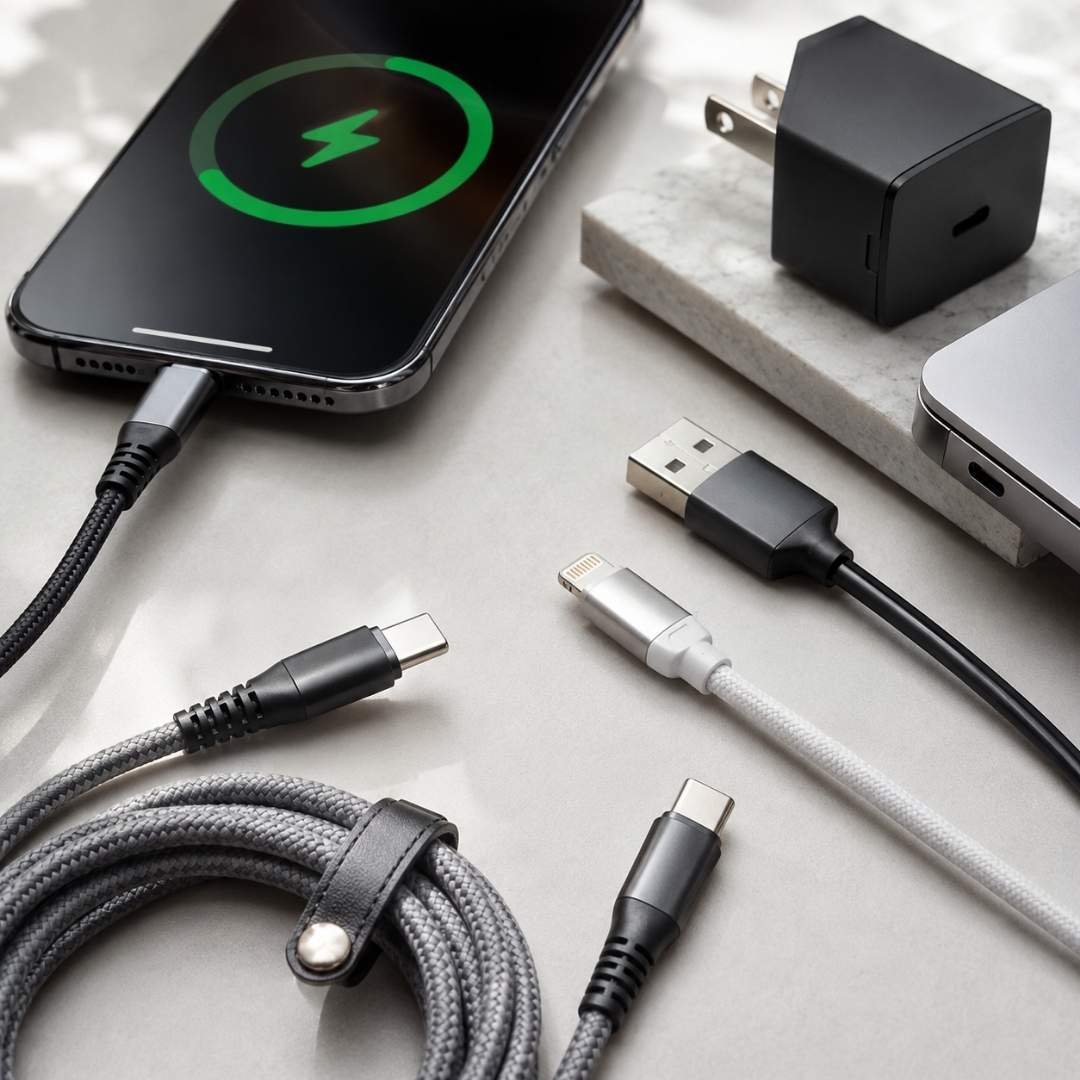
USB-C has become the modern charging standard.
Compared to older USB-A ports, USB-C offers:
- Faster charging
- Faster data transfer
- Better compatibility
- Higher wattage support
When choosing a power bank for your phone, always prioritize USB-C input and output ports.
This ensures better future compatibility with upcoming devices.
5. Check Number of Ports
If you use multiple devices daily, choose a power bank with multiple ports.
Useful combinations include:
- USB A + USB C
- Dual USB-C ports
- Multiple output ports
This allows you to charge:
- Smartphones
- Earbuds
- Smartwatches
- Tablets
simultaneously.
However, some power banks reduce charging speed when multiple devices are connected, so check total output ratings carefully.
6. Consider Wireless Charging Support
Wireless charging power banks are becoming increasingly popular.
These are especially convenient for users who dislike carrying cables.
Magnetic wireless charging is commonly used with newer smartphones that support magnetic alignment.
Wireless charging is convenient but usually slower compared to wired charging.
If charging speed matters more, wired charging remains the better option.
7. Prioritize Safety Features
Safety is one of the most important factors when choosing a good power bank.
A poor quality power bank can damage your phone battery or overheat during charging.
Important safety features include:
- Overcharge protection
- Short circuit protection
- Temperature control
- Overcurrent protection
- Voltage regulation
Also, check for recognized certifications like the BIS certification in India.
Certified products are usually safer and more reliable.
8. Consider Size and Weight
Higher-capacity power banks naturally become heavier.
Before buying, think about how you plan to carry it.
Slim Power Banks
Best for:
- Daily commuting
- Office use
- Pocket carrying
Heavy Capacity Power Banks
Best for:
- Travel
- Outdoor work
- Laptop charging
Choose according to your comfort and usage habits.
9. Build Quality Matters
A power bank goes through regular handling, travel, and charging cycles.
Good build quality improves durability.
Common materials include:
- ABS plastic
- Rubberized coating
- Metal body
Rubberized surfaces offer better grip, while metal bodies improve heat management.
10. Useful Additional Features
Modern power banks now include several convenient features.
Helpful additions include:
- LED battery indicators
- Digital percentage display
- Built-in cables
- Pass-through charging
- Foldable stands
These features improve overall convenience during daily use.
Common Mistakes While Buying a Power Bank
Avoid these common buying mistakes:
- Choosing only based on mAh numbers
- Ignoring the charging speed
- Buying extremely cheap products
- Not checking safety certifications
- Using low-quality charging cables
- Ignoring portability
The right balance matters more than simply buying the largest battery available.
Final Thoughts
Understanding how to choose a good power bank for your mobile becomes much easier once you focus on your actual needs.
For most users:
- 10,000mAh works perfectly for daily use
- 20,000mAh suits travelers and heavy users
- 20W or higher output ensures fast charging
- USB-C support improves compatibility
- Safety certifications provide reliability
A good power bank should feel practical, safe, portable, and fast enough for your lifestyle.
Instead of chasing the biggest numbers, focus on real-world usability and long-term reliability.
FAQs About Choosing a Power Bank for Mobile
1. How to choose a good power bank for mobile?
Choose a power bank based on capacity, charging speed, safety features, portability, and USB-C compatibility.
2. Which mAh power bank is best for daily use?
A 10,000mAh power bank is considered ideal for daily smartphone usage.
3. Is a 20,000mAh power bank good for travel?
Yes. A 20,000mAh power bank is excellent for travel and charging multiple devices.
4. What is the best wattage for fast charging?
A 20W or higher power bank is recommended for modern fast charging smartphones.
5. Does a higher mAh mean faster charging?
No. mAh determines battery capacity, while wattage determines charging speed.
6. How many times can a 10,000mAh power bank charge a phone?
Usually around 1.5 to 2 full charges depending on the phone battery size.
7. Are wireless power banks slower?
Yes. Wireless charging is generally slower than wired charging.
8. Is USB-C important in a power bank?
Yes. USB-C supports faster charging, better compatibility, and higher power delivery.
9. Can a power bank charge laptops?
Yes. High-wattage power banks with 45W to 65W support can charge many laptops.
10. Which is better, 10,000mAh or 20,000mAh?
10,000mAh is better for portability, while 20,000mAh is better for longer backup.
11. How long does a power bank last?
A good quality power bank can last around 3 to 5 years depending on usage.
12. Are cheap power banks safe?
Low-quality power banks may lack proper safety protection and can damage devices.
13. What safety features should a power bank have?
Look for overcharge protection, short circuit protection, and temperature control.
14. Can I carry power banks on flights?
Yes. Most airlines allow power banks under approved battery capacity limits.
15. Why is my power bank charging slowly?
Slow charging can happen due to low wattage output, poor cables, or incompatible charging protocols.