
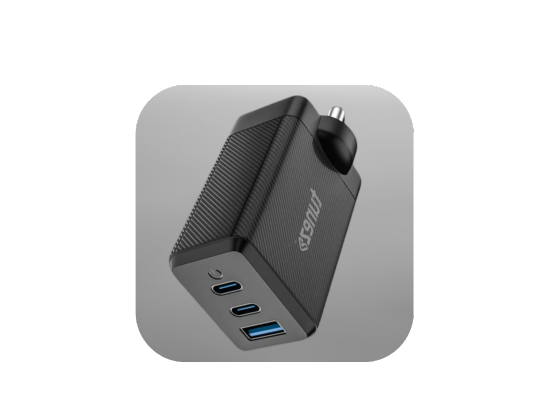






USB-C charging has changed how we power smartphones, tablets, laptops, and other everyday devices. Its compact connector, broad compatibility, and support for advanced charging standards make it a key part of modern charging.
But USB-C does not automatically mean fast charging. Charging speed depends on the charger, device, cable, and supported charging protocol. USB Power Delivery, for example, allows compatible devices to negotiate the power they need and can support power levels up to 240W with suitable USB-C equipment.
How USB-C Charging Has Evolved
Earlier USB charging solutions were often limited in power output and charging flexibility. Modern USB-C chargers can support higher power levels and smarter power management when paired with compatible devices.
USB Power Delivery allows a charger and connected device to negotiate an appropriate power level instead of simply delivering one fixed output.
This can provide:
- Faster charging for compatible devices
- More efficient power delivery
- Support for different device power requirements
- One charging standard across multiple device types
Why Fast Charging Matters
Fast charging is useful when you need to power a device quickly before leaving home, travelling, or returning to work.
Technologies such as USB Power Delivery can provide higher power output when the charger, cable, and device all support the required specifications. USB-C cables can also have different power and data capabilities, so the connector alone does not determine performance.
This makes it important to check the power rating and charging protocol rather than choosing a charger based only on its USB-C port.
USB-C Charging for Everyday Devices
USB-C has become common across smartphones, tablets, laptops, headphones, power banks, and other electronics. Understanding the types of USB ports can also help you choose the right charging connection for your devices.
A suitable USB-C charger can reduce the need for multiple charging adapters and make it easier to power different devices from one charging setup. Multi-port chargers can also provide a practical solution when several devices need power at the same time.
Why Choosing a Quality USB-C Charger Matters
A charger should be selected based on more than its maximum wattage. Device compatibility, charging standards, cable capability, safety features, and build quality all affect the charging experience.
Look for:
- Appropriate power output for your device
- USB Power Delivery or another supported charging standard
- Reliable safety protection
- Compatible charging ports
- A cable that supports the required power level
USB-IF specifications also distinguish USB-C from USB Power Delivery, meaning a USB-C connector by itself does not guarantee a particular charging or data performance level.
What to Expect From the Future of USB-C Charging
USB-C charging continues to develop as devices require more power and greater efficiency. USB Power Delivery has already expanded to support applications requiring up to 240W, while USB-C cables can carry different power and data capabilities depending on their specifications.
For users, this means choosing chargers and cables based on actual device requirements will become increasingly important.
Conclusion
USB-C has become an important part of modern charging because it supports a wide range of devices and advanced power delivery technologies.
For the best charging performance, consider the charger’s power output, the device’s charging requirements, the cable’s capabilities, and the supported charging protocol. Choosing the right combination can provide faster, safer, and more reliable charging.
Discover the benefits of Type C charger and choose a reliable charging solution for faster, safer, and more efficient everyday charging.

