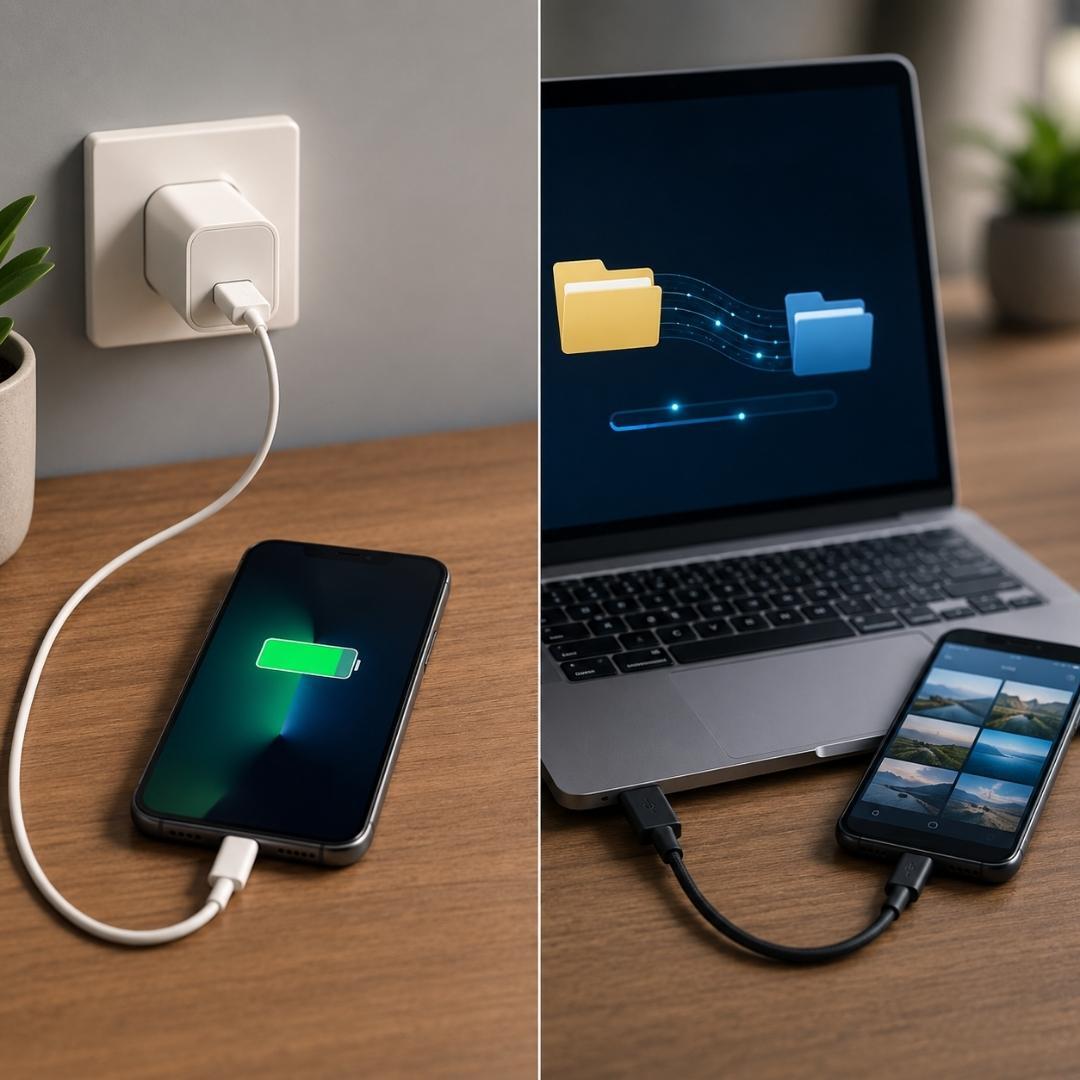









Most people use a data cable every single day without ever thinking about what is actually inside it.
You plug it into your phone, laptop, tablet, power bank, or earbuds and expect everything to work smoothly. But the performance, charging speed, durability, and lifespan of a cable depend heavily on the materials used inside it.
Some cables last for years without damage, while others stop working within a few months. The difference usually comes down to build quality and the materials used in the data cable.
In this guide, you will learn what data cables are made of, how each material works, why some cables perform better than others, and which cable materials are best for long-term use.
Why Data Cable Materials Matter
The materials inside a cable directly affect:
- Charging speed
- Data transfer stability
- Heat resistance
- Flexibility
- Durability
- Safety
- Cable lifespan
A good quality cable is not just about appearance. Even two cables that look identical from the outside may perform very differently internally.
That is why understanding the materials of the data cable is important before buying one.
Main Parts of a Data Cable
A typical USB data cable is made up of four main components:
- Inner conductors
- Insulation and shielding
- Outer jacket
- Connectors
Each part uses different materials that contribute to the overall quality and performance of the cable.
Inner Conductors Inside a Data Cable
The inner conductors are the core wires inside the cable responsible for carrying power and transmitting data.
These are among the most important materials in any charging or data cable.
Copper Wires
Copper is the most commonly used conductor material in USB cables.
It is widely preferred because it offers:
- Excellent electrical conductivity
- Stable charging performance
- Reliable data transfer
- Lower resistance
- Better efficiency
Pure copper cables usually perform better than cheaper alternatives because they reduce power loss and overheating.
Tinned Copper
Some cables use tinned copper wires, where a thin layer of tin covers the copper.
This helps:
- Prevent oxidation
- Improve lifespan
- Protect against moisture
- Maintain stable performance over time
Tinned copper is commonly found in durable charging and data cables.
Silver Plated Copper
Premium cables sometimes use silver-plated copper conductors.
Silver improves signal transmission and helps support faster and more stable data transfer speeds.
These cables are usually more expensive but offer improved performance for demanding applications.
Insulation Materials in Data Cables
The insulation layer wraps around the inner wires and prevents them from touching each other.
Also, it helps keep the internal wires separated and protects the cable from damage or connection issues.
Polyethylene Insulation
Polyethylene is commonly used because it provides:
- Good electrical insulation
- Heat resistance
- Stable signal protection
- Long-lasting durability
It helps maintain proper signal quality during charging and data transfer.
PVC Insulation
PVC is another commonly used material in cables.
It is popular because it is:
- Affordable
- Durable
- Flame resistant
- Easy to manufacture
However, cheaper PVC cables can sometimes feel stiff and less flexible after prolonged use.
Shielding Materials in Data Cables
Shielding protects the cable from signal interference caused by nearby electronic devices.
Without proper shielding, users may experience:
- Slow file transfers
- Unstable connections
- Charging interruptions
- Data loss
Aluminum Foil Shielding
Many cables use aluminum foil around the wires to reduce interference.
This helps create more stable communication between connected devices.
Braided Metal Shielding
Premium cables often include braided metal mesh shielding for additional protection.
This improves:
- Signal stability
- Durability
- Noise reduction
- Overall cable reliability
Good shielding becomes especially important for fast charging and high-speed data cables.
Outer Jacket Materials of Data Cables
The outer jacket is the visible exterior part of the cable.
This layer protects the internal wires from bending, stretching, twisting, and physical damage.
Different outer materials offer different levels of flexibility and durability.
TPE Data Cable Material
TPE stands for Thermoplastic Elastomer.
This is one of the most common materials used in original charging and data cables today.
Why TPE Is Popular
TPE cables are:
- Soft and flexible
- Comfortable to handle
- More environmentally friendly
- Resistant to daily wear
- Less likely to crack easily
Most modern smartphone cables use TPE because it provides a good balance between durability and flexibility.
Real World Example
If you notice your original phone cable feels soft and smooth, it is likely made with TPE material.
These cables usually remain flexible even after months of use.
PVC Data Cable Material
PVC stands for Polyvinyl Chloride.
PVC cables were extremely common for many years because they are inexpensive and durable.
Advantages of PVC Cables
- Strong outer protection
- Flame resistant
- Low manufacturing cost
- Good durability
Disadvantages of PVC Cables
Some low-quality PVC cables may:
- Become stiff over time
- Crack after repeated bending
- Feel rough in hand
- Generate more heat during heavy use
Today, many manufacturers prefer TPE over PVC because users want softer and more flexible cables.
Braided Nylon Data Cables
Braided nylon cables are often preferred by users who want better durability and longer cable life compared to standard cables.
Instead of a regular smooth plastic coating, these cables feature a woven nylon outer layer that adds extra strength and gives a more premium feel. A good example is the Tunez Nexus CB-40 Type C Fast Charging Data Cable, which combines fast charging support with a strong braided nylon design for everyday use.
Benefits of Braided Nylon Cables
- Better bending resistance
- Reduced tangling
- Improved durability
- Stronger protection against cuts and fraying
- Premium appearance
These cables are popular among users who frequently travel or use cables heavily throughout the day.
Real World Example
If your cable often breaks near the connector area, switching to a braided nylon cable may help increase lifespan significantly.
Silicone Data Cables
Silicone cables have become increasingly popular in premium accessories.
These cables are known for being:
- Extremely soft
- Highly flexible
- Heat resistant
- Comfortable to use
- Resistant to extreme temperatures
Many users prefer silicone cables because they rarely tangle and feel smoother compared to traditional PVC cables.
Connector Materials in Data Cables
The connectors are the metal ends that plug into your devices.
Examples include:
- USB A
- USB C
- Lightning
- Micro USB
The quality of the connector materials also matters greatly.
Common Connector Materials
Connectors are usually made using:
- Copper
- Brass
- Aluminum alloy
Some premium connectors are gold-plated to improve conductivity and reduce corrosion over time.
How Cable Materials Affect Performance
The materials used inside a cable influence more than just durability.
Higher quality materials can improve:
- Fast charging support
- Stable data transfer
- Heat management
- Device safety
- Long-term reliability
Cheap cables may work initially, but often degrade quickly with daily use.
How to Choose a Durable Data Cable
Before buying a cable, consider these factors:
Choose TPE or Silicone for Flexibility
These materials usually feel softer and last longer during regular use.
Choose Braided Nylon for Heavy Usage
Braided cables are better for travel, gaming setups, and rough handling.
Look for Pure Copper Conductors
Pure copper helps deliver better charging efficiency and stable data transfer.
Check Connector Quality
Strong connector joints help prevent breakage near the cable ends.
Conclusion
The materials used in a data cable play a huge role in how well the cable performs and how long it lasts.
From copper conductors and shielding layers to TPE, PVC, nylon, and silicone exteriors, every material affects charging speed, flexibility, durability, and overall reliability.
Understanding the materials of the data cable helps you make smarter buying decisions and avoid poor quality cables that fail quickly.
A good cable is not just an accessory. It is an important part of protecting your devices and ensuring smooth everyday performance.
FAQs About Materials of the Data Cable
Q. What materials are used in data cables?
Data cables are commonly made using copper conductors, insulation materials, shielding layers, outer jackets like TPE or PVC, and metal connectors.
Q. Why is copper used in data cables?
Copper provides excellent electrical conductivity and stable data transmission.
Q. What is the TPE material in charging cables?
TPE is a soft and flexible material commonly used as the outer layer of charging and data cables.
Q. Are braided nylon cables better?
Braided nylon cables are usually more durable and resistant to bending and fraying.
Q. Which is better between TPE and PVC cables?
TPE cables are generally softer and more flexible, while PVC cables are more rigid and budget-friendly.
Q. Why do some cables break easily?
Low-quality materials and weak connector joints often cause cables to fail quickly.
Q. What is shielding in a data cable?
Shielding protects the cable from signal interference and improves connection stability.
Q. Do cable materials affect charging speed?
Yes. Better materials help improve power delivery and charging efficiency.
Q. What are gold-plated connectors used for?
Gold plating helps resist corrosion and improves electrical conductivity.
Q. Are silicone cables durable?
Yes. Silicone cables are highly flexible, heat-resistant, and less likely to tangle.
Q. Why are premium cables more expensive?
Premium cables use better materials, stronger shielding, and more durable construction.
Q. Which material is most common in phone cables?
TPE is currently one of the most commonly used materials in smartphone charging cables.
Q. Can poor-quality cables damage devices?
Yes. Cheap cables may overheat, deliver unstable power, or reduce charging efficiency.
Q. What is the strongest cable outer material?
Braided nylon is considered one of the strongest outer materials for daily use.
Q. How do I know if a cable is high quality?
Look for strong connectors, flexible outer material, good reviews, and proper charging and data support.